
In this article we investigate how veterans demonstrate the value of their military experiences, how employers perceive these skills, and the societal narratives shaping transition outcomes. Despite possessing competencies in leadership, adaptability and cross-cultural communication, veterans frequently encounter misconceptions that obscure their professional value. Four key themes emerge: situation contextualization (adapting skills to new environments), flexible performance (and self-efficacy), cross-cultural communication (empathic approach), and initiative-taking(inventing space for action). These themes illustrate how veterans create meaning and agency in civilian work environments through reflective practice.
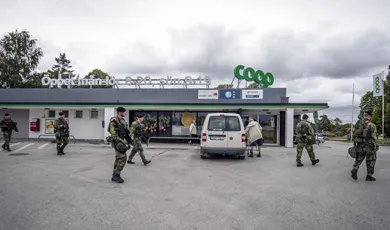
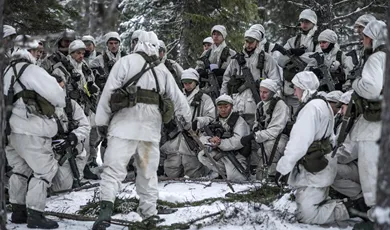
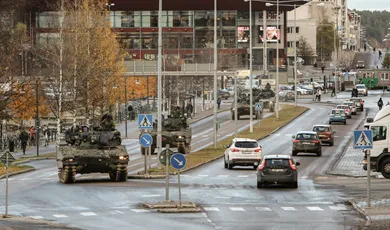
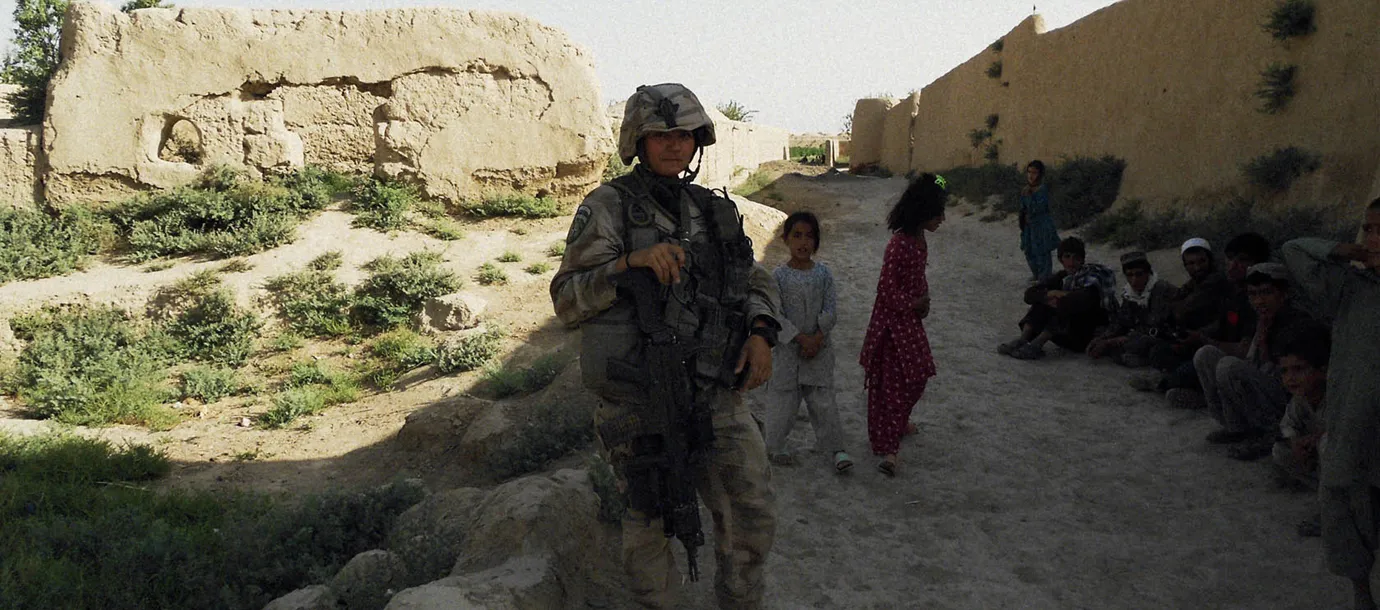 Photographer: Anders Eckerberg, SAF
Abstract
Veterans returning from military service often struggle to translate their occupational experiences into recognized civilian employment skills, despite possessing valuable competencies. This study examines how Swedish veterans from international overseas deployments navigate this transition, using qualitative data from in-depth interviews and reflective writings with 33 participants. Grounded in Donald Schön’s theory of the reflective practitioner, the research frames veterans’ career transitions as reflective processes involving navigation of uncertain professional territories. The study investigates how veterans demonstrate the value of their military experiences, how employers perceive these skills, and the societal narratives shaping transition outcomes. Despite possessing competencies in leadership, adaptability, and cross-cultural communication, veterans frequently encounter misconceptions that obscure their professional value. Four key themes emerge: situation contextualization (adapting skills to new environments), flexible performance (and self-efficacy), cross-cultural communication (empathic approach), and initiative-taking (inventing space for action). These themes illustrate how veterans create meaning and agency in civilian work environments through reflective practice. The findings reframe veterans as competent resources rather than vulnerable subjects, offering practical insights for employers seeking diverse talent, policymakers developing transition programs, and veterans themselves navigating career changes. This research contributes to understanding skill transferability and professional identity transformation in post-military careers.
Keywords: Occupational transition · Military veteran · Experience · Competence · Civilian employment
I have learned that patience is a virtue [...]. I have learned to carry out my mission despite an inner struggle of despair [...] I have learned to take command where others become paralyzed [...]. I have learned what the word “delegation” means in practice and have learned to use it when I have a lack of time or knowledge (veteran X).
Excerpt from the introduction:
The transfer of occupational competencies presents a compelling issue, especially in the contemporary work environment where transitioning between organizations, across domains, and work cultures has become commonplace. Being able to recognize, articulate, and employ competencies acquired in one specific work context to a different one has implications for workplace learning and human resource development. The issue becomes particularly salient when the transition involves radically different organizational structures, and cultural norms. In the article we examine this question through the lens of a specific workplace transition—individuals who have completed international service training and deployment subsequently entering civilian employment sectors. By focusing on Swedish personnel who have engaged in overseas deployments before transitioning to civilian careers, we aim to investigate what occupational experiences from overseas deployment can be transformed into competencies applicable to diverse work contexts.
Our investigation addresses the research question: how do individuals who have completed international military service express the value of their overseas occupational experiences for their ensuing civilian work? This inquiry contributes to broader discussions in vocational learning about competence recognition, informal learning, and workplace learning transfer.
Workplace Learning and Competence Transfer
Individuals develop transferable competencies through diverse pathways that extend beyond formal educational settings. Institutionalized education, along with personal experiences and social circumstances, collectively shape the conditions for lifelong learning (Billett 2024). However, personal experiences and social circumstances are significantly less recognized as important factors in the development of vocational competences, despite their substantial contribution to professional development (Salling-Olesen 2007). This represents a gap in understanding how workplace learning occurs across different organizational contexts. The preparatory training that individuals undergo for overseas military deployment constitutes a form of institutionalized education consisting of programs and relevant curricula specifically designed to achieve defined learning outcomes (Choy & Hai Le 2023). Typically, this involves completion of basic (conscript) military training followed by preparatory operation training lasting at least nine months, succeeded by six months to a year of practical application in international contexts. After completing their service, most Swedish soldiers return home to civilian employment (Bäckström 2024). This structured approach provides a good case study for understanding the interplay between formal training and learning from experiences in creating transferable competences.
From research we know that military veterans transition into civilian employment with a diverse set of transferable skills that are both technical and interpersonal in nature (Davis & Minnis 2016). Among the most frequently cited are leadership and management capabilities, honed through structured command hierarchies and mission-critical responsibilities. Veterans also bring technical proficiencies in areas such as logistics, engineering, and operations, which are directly applicable to high demand civilian sectors. In addition, they exhibit strong professional attributes including discipline, reliability, and the ability to work under pressure—traits that are consistently valued across industries (Keeling et al., 2018). Veterans also demonstrate soft skills such as communication, adaptability, and teamwork, which enhance their effectiveness in collaborative civilian work environments. However, significant challenges persist in translating specialized occupational competencies into language and frameworks recognized by different employment sectors. Many individuals find it difficult to articulate how their military training and experience translate to civilian workplace requirements (Binks & Cambridge 2018; Morris & Hanna 2023), often resulting in underemployment or misalignment with appropriate roles (Castaneda 2019). This suggests a broader issue in vocational learning: the need for better frameworks to support competence recognition and transfer across diverse work contexts.
This Article can be downloaded from Springer Nature Link
Cite this article
Victor Tillberg, L., Truusa, T. & Tillberg, P. The Skillful Veteran: Transforming Overseas Experience into Competence, from the Military to Civilian Working Life Domain. Vocations and Learning 19, 5 (2026). https://doi.org/10.1007/s12186-026-09385-w
And here is also a PDF of the article

Lotta Victor Tillberg
The Swedish Centre for Studies of Armed Forces and Society, SE

Tiia Triin Truusa
Baltic Defence College

Peter Tillberg
Director at The Swedish Centre for Studies of Armed Forces and Society, SE